
DCKC NE Coast Trip Report 26-29 June 2026 – Caithness – the gift that keeps on giving.
Amanda G.
At last, a trip to NE coast of Scotland coincided with good weather and a big thumbs up for 3 days paddling in an area famous for caves, sea stacks and seabirds. All was completely new to me. I have driven upon the A9 en-route to JoG, Shetland & Orkney and cycled parts of it on trips to the flow country and beyond, but never paddled there. It is a long way, but every minute of the drive was rewarded in spades by the sights and experiences of the weekend
We left Glasgow on Thursday 25th June in 27c with clear, bright sunshine and arrived in Dunbeath 6 hours later (did I say it was a long way?) in just 14C, cloud and drizzle. After dinner a brief trip planning meeting in the shelter of Richard’s van confirmed his suggestion of a one-way trip from Dunbeath to Helmsdale. Tides in the area are minimal, and the general advice is to go in whichever direction will result in a following wind. Then a massive thunderstorm directly overhead and torrential rain quickly sent us to our beds. The storm continued for much of the night, causing a sleepless night and early morning for Janice in a slowly flooding tent.
The rest of us had much better nights sleep in our vans and were alert and raring to go on Friday morning. Driving to the small harbour in Dunbeath in the sun we marvelled at how lucky we were with the weather, now that the storm had passed. However, all the rain had filled the rivers, so launching perpendicularly into the fast flow looked daunting, but proved to be quite straightforward, and we were soon off on our one-way trip to Helmsdale.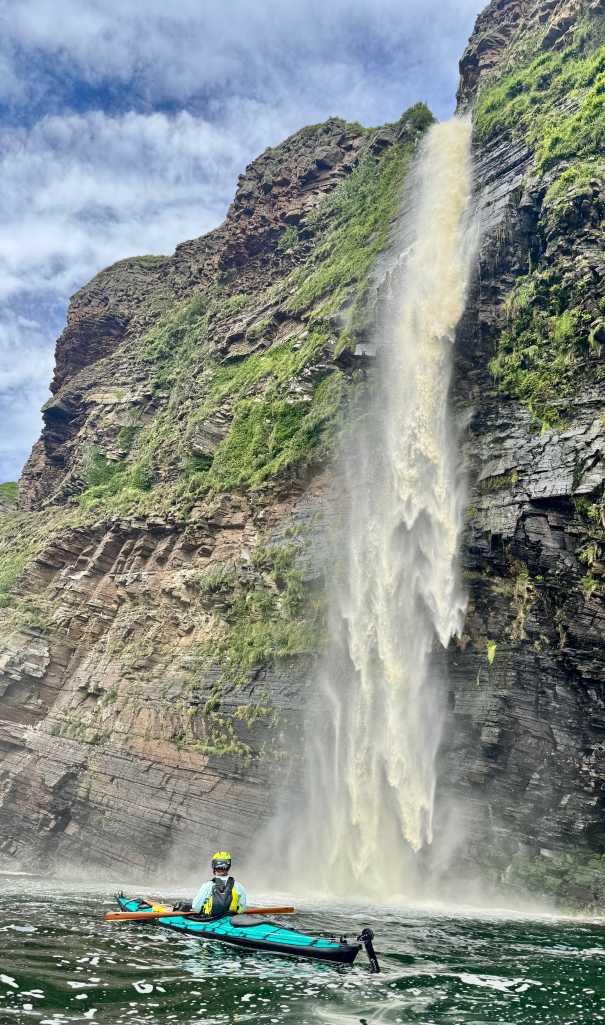
Many of the rain-filled rivers flooded over the cliffs to the sea, so the waterfalls were at peak flow – dramatic and beautiful, but too fierce to get directly under – just close!
Our route took us through the cathedral-scale arch of An Dun (The Fort), marked on OS maps, which turned out to be just one of many stunning arches and sea stacks interspersed with castle ruins and dramatic caves, all accessible to us in the benign conditions.
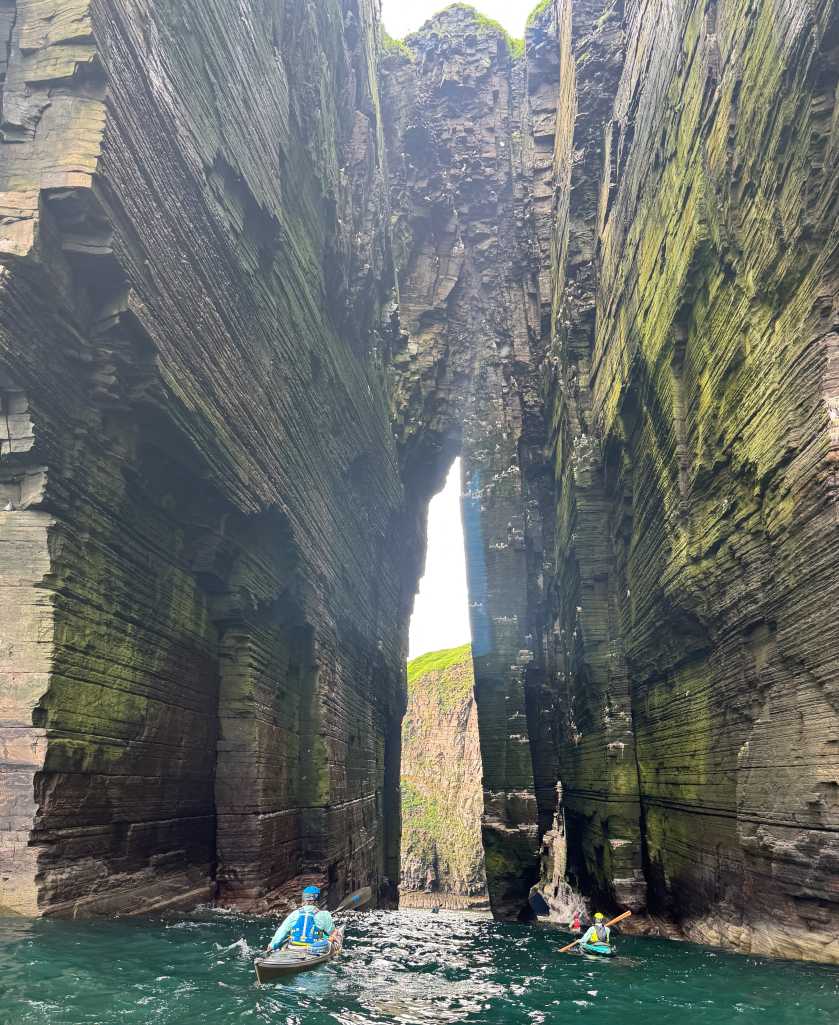
The weirdest thing about the day, and all our paddles in this area, was the strong sensation of paddling down or up hill – often a steep hill. This is due to tectonic activity having tilted the sandstone rock leaving the sharply defined strata at an angle of ~30o or more to the water. Our brains wanted to think the strata was level, (it was in many places), which meant that the water had to be going down or up hill! A similar but much lesser experience can be had at Electric Brae south of Ayr, but neither appear very significant in any photographs.
To add to the confusion the seabirds were crazy, with juvenile guillemots and razorbills plopping into water all around us, sometimes colliding with each other – or us, while the adults cruised around high overhead before plunging into the sea and bobbing up all over the place. One charming feature closer to the cliffs was the floating half eggshells and downy feathers representing the various developmental stages of the hatchlings.
At the end of the gentle 25km the landing at Helmsdale was straight-forward, the shuttles worked well and soon we were all back at the campsite hungry for the copious quantities of spag-bol Janice had brought for us all.
After a good night’s sleep for all, we had a slow start before setting up the shuttles to paddle from Ackergill. Some of the guidebooks talked of an out-and-back to Noss Head, others talked of going on round the headland to Staxigoe. The caves, arches and stacks are all on the first section, with the second section to Staxgoe having fewer features or points of interest. At our trip planning session the night before we were marginally concerned by the forecast of an increasing southerly wind that may cause problems rounding the headland and continuing southwards. But who would not want to explore further and finish at the enigmatically named Staxigoe? We hedged our bets and left a vehicle there, should we need the shuttle and agreed that we would assess the conditions at Noss Head and only continue if everyone was comfortable to do so.
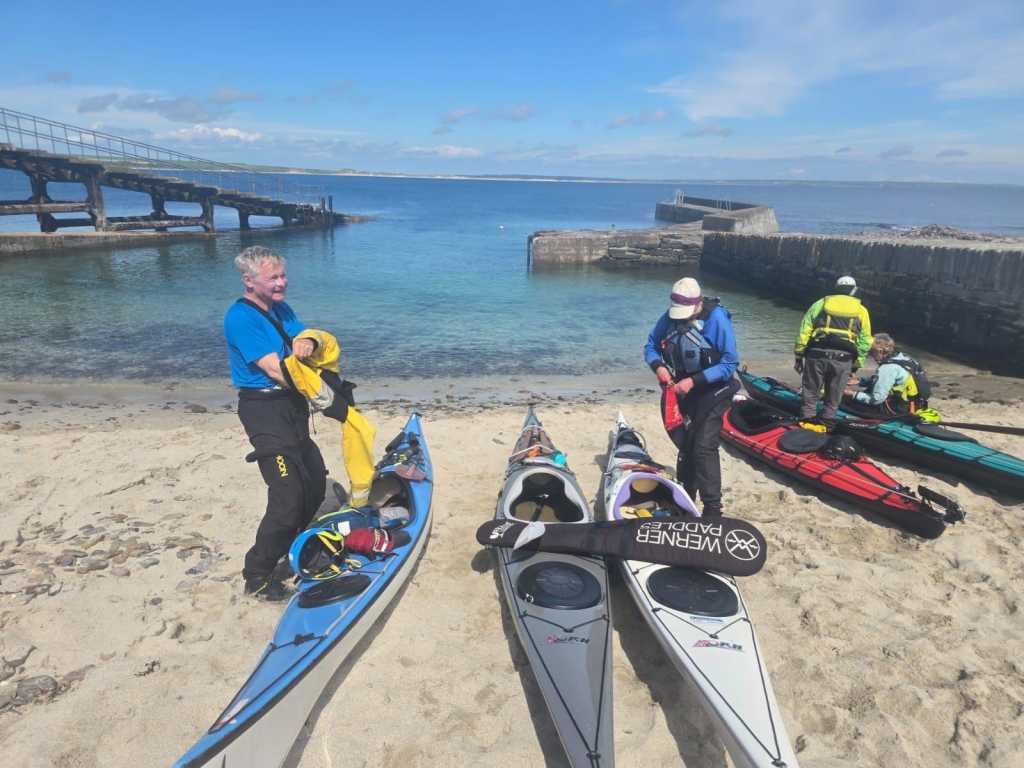
Ackergill Harbour is beautiful. The water was the crystal-clear turquoise we associate with the Caribbean, the sand clean and golden and the views along the coast spectacular, all with the added bins of plenty of easy parking. Having grown up in a tourist resort on the south coast of England I marvel at the accessibility, quiet and calm at such amazing places that would be overcrowded, noisy, expensive and smelly honey-traps back ‘home’. It is poor weather & midges that keep Scotland so beautiful, and we were lucky not to have either this weekend.
The conditions appeared less than we had expected from the forecasts, and we launched with optimism for a one-way paddle. I had lower expectations for today’s paddle – how could it match the stunning scenery we had experienced yesterday? And how wrong could I be?!
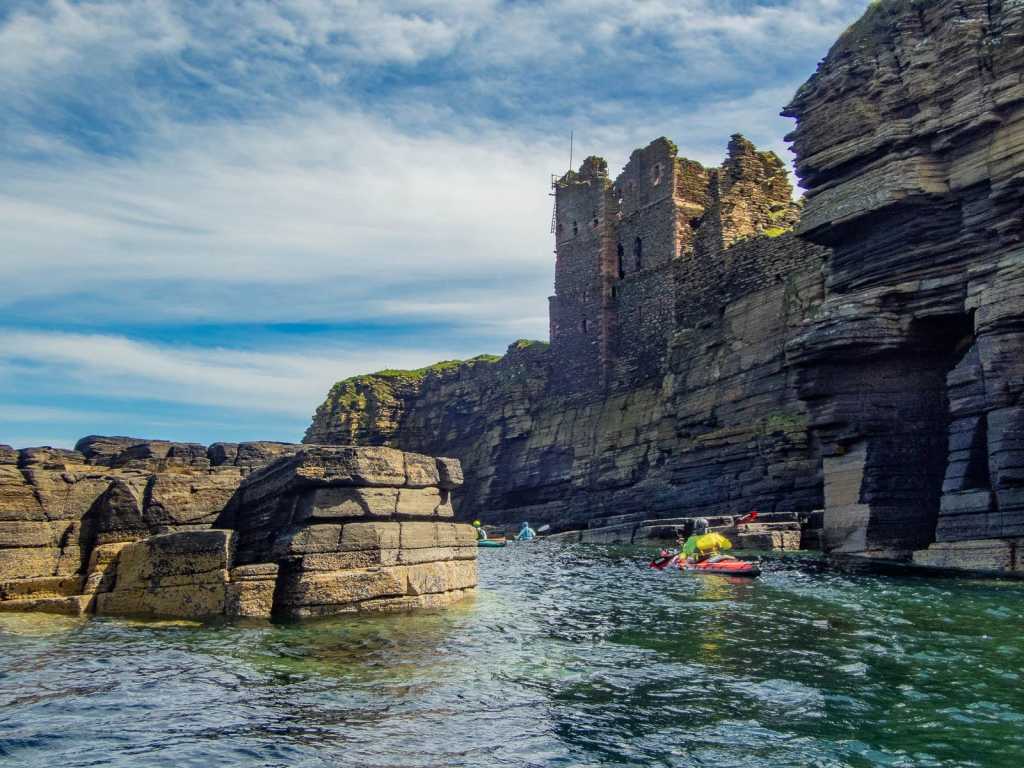
More stacks, caves and arches, right from the start, none big as An Dun, and all in a much more confined area, but still stunning. No problem rounding the headland, with good views of the lighthouse, we paddled all the way to Staxigoe where Richard’s van was set upon for the shuttle.
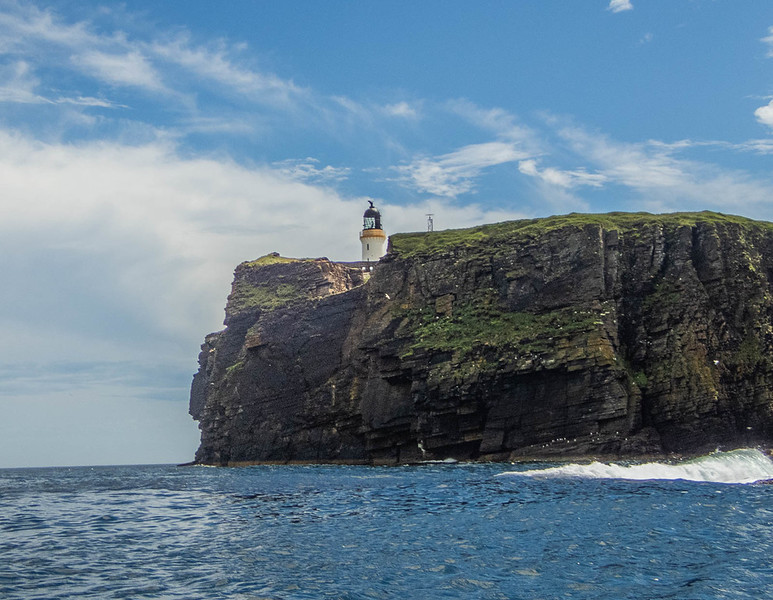
After loading most of the team went back to the campsite while I could not resist the desire to swim in such a beautiful place in the company of a young girl played in the water for hours, much longer than my short, refreshing swim.
The final trip planning session was complicated by varying amounts of wind in the forecasts from F4-7. We decided on setting off form Dunbeath again, using the southerly wind to take us north to Lybster. In the morning the forecasts generally to settled on F4/5 but picking up in the afternoon, making our plan do-able, with care.
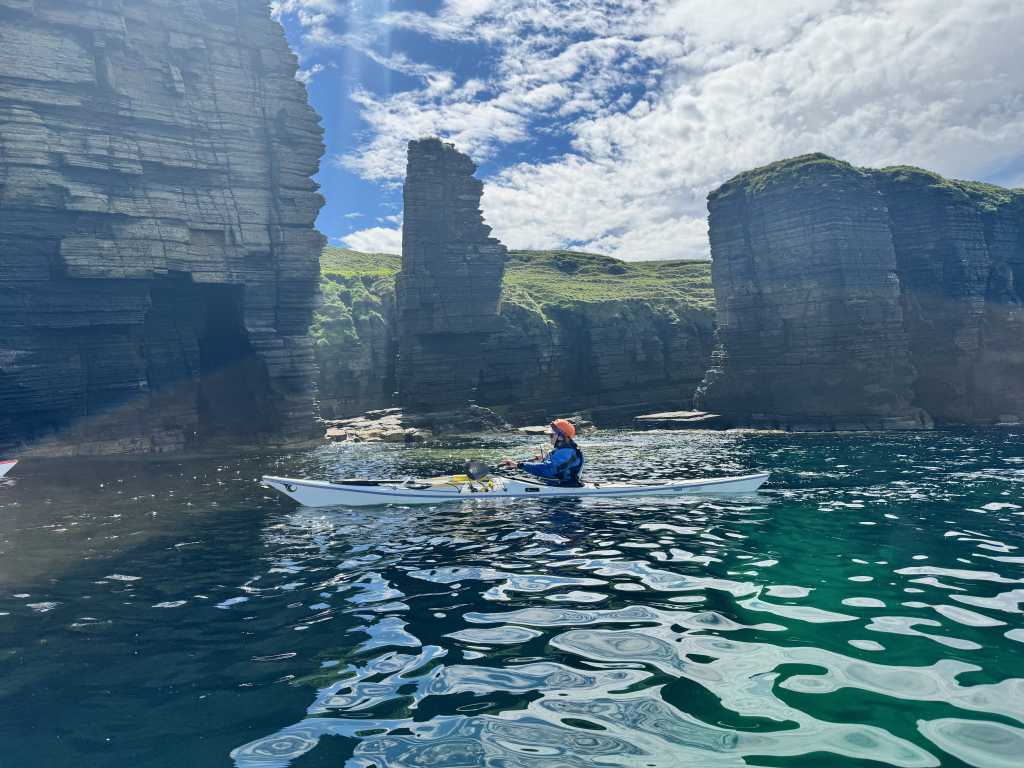
We travelled slowly with yet more stacks and arches to explore, and the ever present sea-birds to watch, but the few caves were inaccessible to us. A fishing boat landed with it’s catch of crab & lobster while we were having our lunch in the sun at Latheronwheel. We didn’t buy anything, but did chat with the fisherman who warned us, several times, of the increasing wind and a ‘lumpy section round Leac Gallain, the headland just before our destination at Lybster. And sure enough, just as they and our forecasts had predicted the wind picked up soon after we set off again. We agreed no more exploration, but aim to paddle the remaining ~7km reasonably quickly to land at Lybster before the worst of the wind arrived. And, as predicted, conditions got ‘interesting’ rounding the final headland, with a communal sigh of relief when the Lybster lighthouse came into view.
We made a basic mistake of paddling into and round the harbour only to find that there is no suitable exit for kayaks. This meant paddling back a few hundred meters directly into the now F6/7 wind, the toughest part of the whole weekend. We should have headed for the right-hand side (east end) of the shingle beach, where the steps that lead up to the car park only become visible once you are committed to this plan.
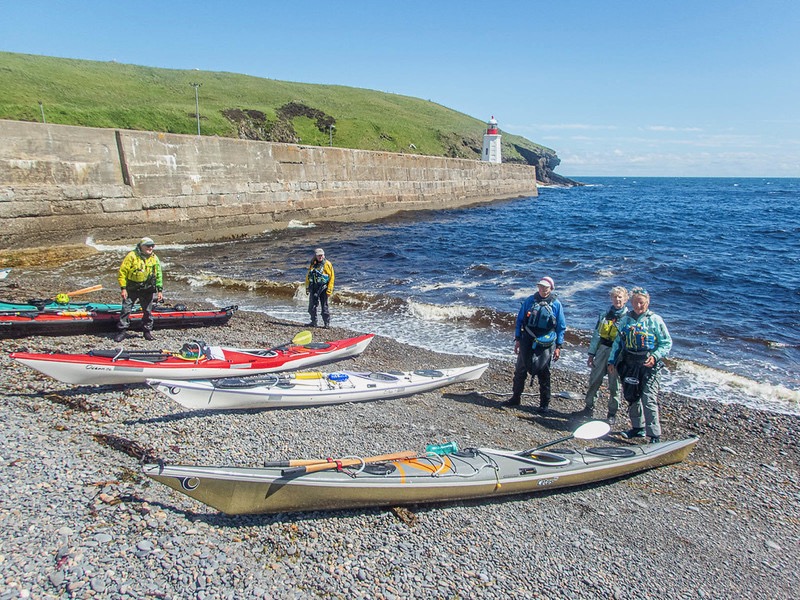
We all had coffee &/or ice creams then a quick tour of the adjoining local history museum before it closed. Then, while some of us were on the shuttle the fisherman from Latheronwheel turned up to check that we had all made it safely – how very kind and considerate of him. After a brief chat about the vagaries of the sea and weather, I think he realised we were an experienced group, rather than just a lucky one, but it always good to chat with the locals and glean all in formation possible about an area.
Monday morning saw some setting off for home with others doing a selection of local and not so local hills to make the most of this beautiful part of the country – Caithness – the gift that keeps on giving.
Many thanks Richard for suggesting, organising and leading the trip as well as most of these pictures, John for all his advice and experience, Janice – for being Janice, and for knowing about the steps at Lybster, and Celia for her support and words of wisdom.
More photographs are here on the club SmugMug Gallery
You must be logged in to post a comment.