

In this issue:-
1. Committee stuff
2. Training update
3. Trip reports
4. Poetry Corner
5. Craic’n Classics – Revisiting some of the best from the past
6. Free roofs bars and feet
7. Editor’s Parting Words
1 Committee Stuff
1.1 AGM
The 2026 AGM will be held at 19.30 on Wednesday 28th October in the upstairs function room at the The Station, Station Rd, Bearsden, Glasgow G61 4AN. The agenda & draft minutes from last year can be found in the calendar on the website and here.
The pub provides the room to us free of charge, so please buy a drink and even a meal, if you get there early.
At this years AGM a number of committee positions are available, if you would like to fill any of these roles you may be nominated on the night or if you cannot attend the AGM please send your nomination to the club secretary (info@dckc.co.uk).
Roles that we currently know are available are:
Media manager – to raise the profile of the club in Facebook and Instagram, TikTok and any other social media. This could be combined with the Newsletter co-ordinator role that will also be vacant.
We would love to fill the position of Social Secretary which was vacant last year.
We continue to look for someone to take the advisory role of Club safety officer that Graham has been doing alongside Club Secretary.
Under our Constitution 1/3 of the committee stand down each year, including any roles appointed during the year (Sea Kayak Lead Coach) and also this year, all who signed the application to OSCR in 2025 when the charity was formed (Secretary, Chair and Coaching Coordinator). Although the current postholders step down at the AGM they are all willing to stand for renomination alongside any other nominees..
We also have open positions for General Members.
All these positions are vital for the running of the club, so feel free to contact the current post holders or any member of the committee if you would like more information about what is involved and the training available.
1.2 Bank Account
Following the change to charitable status the club’s bank account has now been changed to the Co-operative Bank. Stripe, and MemberMojo have been updated so you can carry on paying your trip & pool fees and renewal subscriptions in the usual way. For bank transfers and any other payments you will need the new bank details:
Name: Drumchapel & Clydebank Kayak Club SCIO
Sort code: 08-92-99
Acc No: 67534289
1.3 Equipment

The last newsletter had an article about the testing and replacement programme for the club’s buoyancy aids. Gary did a whole load of work on this and has sourced the replacements. The good news is that Pat was also working behind the scenes and we have just heard that she was successful in securing a grant that covered the cost of these and will also enable us to buy a couple of new paddles too. Great news indeed.
2. Training update
Training both formal and informal continues and is providing some good results with two more newly qualified Paddle Sport Leaders – Well done & many congratulations to Janice & Eleni; one more Sea kayak Leader – Amanda, and five members passing the Sea Kayak Award, well done Leigh, Zoe, Siubhan, Dougie and Frank, who all had a special celebration at the end of a hard days work.

We also organised a rough water training weekend at Cuan Sound for six improving paddlers. Led by a Paddle Scotland coach, the group gained invaluable experience and came away with a wealth of practical tips and lessons to share with the rest of the club.
Micro-sessions will continue for the rest of the year, Tuesday evenings at the Clydebank pool. These will be on alternate weeks and started on 29/9 with moving sideways, followed on 13th October by hints and tips for more efficient forward paddling.
There have also been a series of beginner sessions at Pinkston aimed at sea kayakers to improve their moving water skills, which were great fun as well as a great learning experience; many thanks to James, Rob & Graham. There may couple more before the end of the season, depending on coach availability.
Let Celia or Amanda know if you have any requests or suggestions for future training sessions and look out for ongoing skill days/weekends being arranged for the winter months.
3. Trip Reports

You have probably seen by now the write-ups for August’s Second Saturday Paddle, Glenuig Weekend, Balmaha Awayday, the Club Summer Expedition, and, beatedly, Introduction to Tidal Water at Cuan Sound last July is a more recent additon. All can found on the website under News & Updates , with pictures in the Gallery

Up & coming trips
Rivers – This Saturday, 17th October.

Keep a look out for WhatsApp messages from Graham who keeps en eye on water levels and opportunities and contact Misha or Sandy if you would like to be added to that group.
The next big event is the Ballachulish Bonanza – 23-25 October, see the calendar for further information.

4. Poetry Corner

I came across Brain Bilston’s poetry during Covid and have continued to follow and chuckle at his witty and amusing lines ever since.
This poem made me ponder what a group of kayakers is called. So I ‘googled’ it to find that there is no formal word, but flotilla, fleet, posse or brigade are words that are often used. I am sure the wit and humour of DCKC’ers can come up with a much more imaginative and amusing “invention”.
Let us know what you think. Put any ideas you have into the Suggestion Box – https://dckc.co.uk/suggestion-box/ and we will read these after the AGM and possibly vote on the one we want to be known by. (‘Starburst’ does not count, we all know how that leader’s nightmare works. (Thinks! … … … … … … Is ‘nightmare’ a good suggestion! )
You can make as many suggestions as you like to enhance your chances of possibly winning a prize!
5. “Craic’n Classics” – Revisiting Some of Our Best Articles
How to Keep Your Hands Warm in Winter from Nov 24
Winter paddling brings its own set of challenges, with cold and wet conditions making it difficult to stay comfortable. While it’s relatively easy to add extra thermals, socks, and a warm hat, keeping your hands warm while retaining dexterity is a trickier task. Here, we’ll explore some of the popular solutions for winter hand warmth, with the pros and cons of each.
Neoprene gloves are often a first choice for new paddlers facing cold conditions who don’t understand their drawbacks. They resemble ski gloves but are made from neoprene, a material designed to provide insulation.
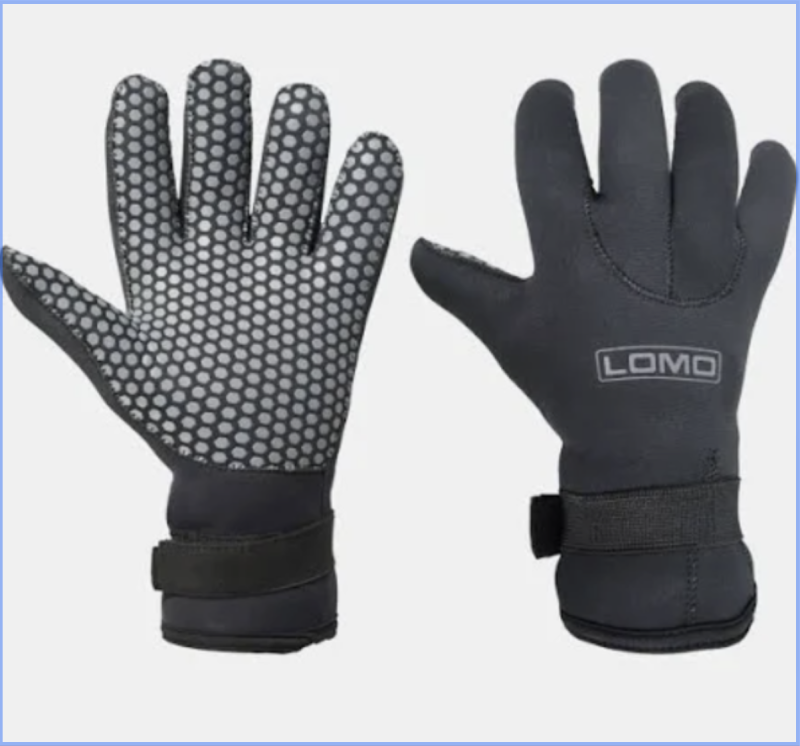
Pros: Warmth when wet: Perhaps because neoprene does continue to warm while wet, many naturally think these offer a reasonable solution.
Cons: Neoprene gloves can be slippery in the paddle and reduce grip and control over the blade as the added layer between your hand and the paddle makes it harder to hold naturally. The thickness of neoprene can make hands sit more open, leading to strain over time and paddlers quickly find these gloves uncomfortable for a day’s paddling.
Summary: Neoprene gloves may appear warm and effective, but the reduced control, potential hand strain, and limited usefulness make them highly impractical for paddling. For most, neoprene gloves end up being a poor investment as the drawbacks outweigh the benefits, and many move on from them quickly in search of better options.
Pogies are a popular, paddling-specific solution. These mitt-style coverings attach directly to the paddle, allowing you to grip the paddle directly while your hands stay shielded, a bit like what you see cycle couriers wearing.
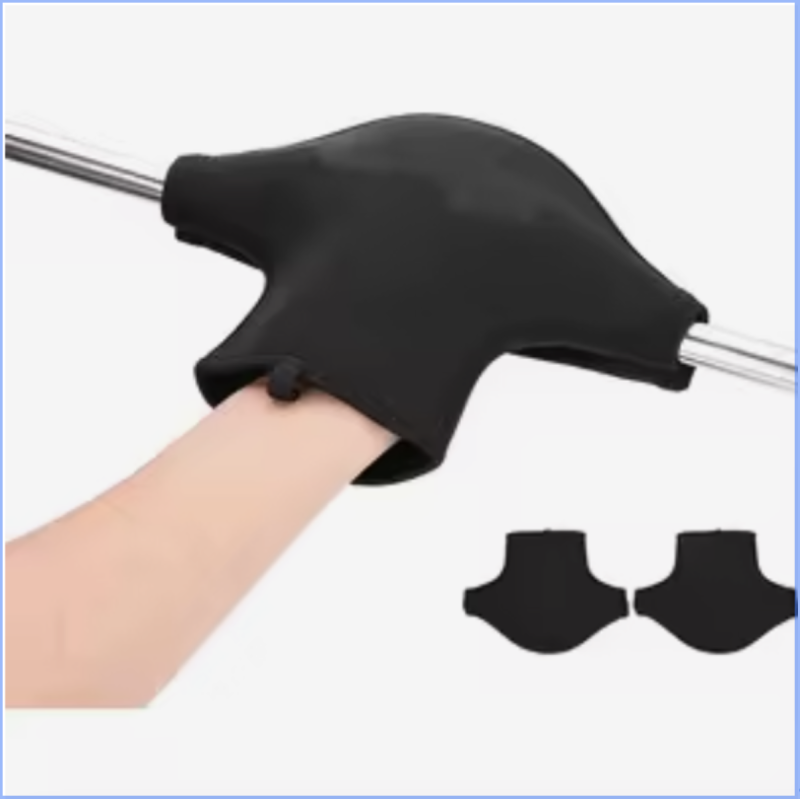
Pros: Warmth without Compromise: Pogies keep your hands warm while allowing direct contact with the paddle, which helps maintain control. Some models hold their shape and stay open, allowing hands to be taken in and out easily. This feature can be very useful when quick access is needed or when adjusting gear. Pogies come in various thicknesses, typically 3mm and 5mm. neoprene or lightweight, windproof water-resistant fabric for milder days. For most paddlers, 3mm pogies are sufficient for all but the most extreme conditions in Scotland. The thicker 5mm pogies (such as the NRS Clutch 5mm or Mamba) tend to hold their shape better, making them easier to use and especially beneficial for people who suffer from cold hands—though they can feel almost too warm on milder days!
Affordability and Durability: Even affordable pogies are typically robust, and high-quality versions can last for decades, making them a solid investment.
Cons: Attachment to the Paddle: All pogies stay attached to the paddle, which can make them awkward to use. Some designs appear to require an extra “third” hand to get your second hand onto the paddle – leading paddlers to sometimes use their mouths to hold the pogie open! This design flaw can make certain models, like Lomos pogies, cumbersome.
Summary: Pogies offer warmth without sacrificing dexterity. If you’re looking for a winter-friendly solution, they’re an excellent option for colder days on the water. Choosing a model that holds its shape and stays open can improve usability, while thickness options allow you to find a warmth level suited to your needs.
Palmless Mitts (or Open Palm Mitts) leave your palm free for direct paddle contact but cover the backs of your hands for protection for the wind and warmth.

Pros: Easy Access: Palm-less mitts stay on your hands continuously, allowing you to use your hands freely without needing to slip in and out. They work well on in-between days where extra warmth might or might not be needed. They’re lightweight (generally made of much thinner material than poggies), compact, and great to carry as an extra layer. Easily folded back to the wrists to quickly allow full dexterity when needed. Versatile for leaders, who may need extra dexterity to assist others, easy to stow and ideal to have on hand as spares.
Cons: Moderate Warmth: Palm-less mitts may not offer the full warmth of 5mm pogies, so they’re best suited for moderate rather than extreme cold.
Durability: While reasonably durable, palm-less mitts don’t last as long as pogies, though they still should last several years.
Summary: Palm-less mitts are a versatile option, offering some warmth without compromising grip. They’re best for milder cold, which tends to be what we, as paddlers, experience in maritime environments, and can be used with pogies as an extra layer on colder days.
In Summary
For paddlers, keeping hands warm without losing functionality is essential. Many experienced paddlers find that relying on either pogies and/or palm-less mitts allows them to maintain hand dexterity and comfort, which is crucial for handling gear, assisting others, or responding quickly to situations on the water. Avoiding traditional neoprene gloves is common due to their limitations in grip and comfort. If you’re leading a group, it’s even more important to keep your hands functional, as others may rely on you for assistance, navigation, or even just small tasks that could be challenging with cold, stiff or numb hands. By choosing the right winter hand-wear, you can keep your hands warm, functional, and ready for anything winter paddling throws at you. Fortunately, staying relatively comfortable in colder conditions is entirely achievable.But always remember the old adage ‘if your hands are cold, put on a hat!’
6 Free roofs bars and feet
Selection of roof rack parts – various mounting feet and steel roof bars
The following are available for collection from Amanda/Peter in Bearsden. If any of the items are of interest you, all we ask is that you make a small donation to the club or the RNLI.
Set of Thule 757 feet for raised roof rails (with access under the rails), or high-profile flush roof rails i.e. they grip the top of the rails. They are supplied with locks and keys. These feet fit modern section roof bars with sliding slots.

Set of Thule 754 feet for cars without rain gutters, rails or fixing points. These are supplied with keys and locks. These feet require specific footprint and bracket kits to fit specific models of car. These kits may be available new and probably available secondhand. These come supplied with footprints (marked 124 (x2), 240 & 244) and brackets (marked 096, I think), which might correspond to the Fit Kit 1498. These feet fit modern section roof bars with sliding slots.

Set of Thule feet for vehicles with rain gutters. These feet are only compatible with standard rectangular-section steel roof bars. These are most likely to be suited to older cars and vans. There are two sets of these feet i.e. enough for two vehicles. One set (A) set has the full complement of knobs. The other set (B) is missing two knobs but standard M8 nuts are included in lieu of the missing knobs.

Set of Thule 1054 (sometime listed as 415) for cars with raised roof rails where there is access under the rails. These feet are only compatible with standard rectangular-section steel roof bars. They include lockable covers, but no locks or keys are included. Locks and keys can be purchased from various suppliers.

Set of Thule 755 feet for raised roof rails (with access under the rails), or high-profile flush roof rails i.e. they grip the top of the rails. These fit modern roof bars with a slot fitting. These are compatible with lockable fitting, but no locks and keys are included. Locks and keys can be purchased from various suppliers.

Set of Thule 950 feet for cars without gutters, rails or fixing points. These feet require specific footprint and bracket kits to fit specific models of car. These kits are unlikely to be available new but probably available secondhand. These come supplied with footprints (marked 11) and brackets (marked 217X), so perhaps Fit Kit No. 217. These feet are only compatible with standard rectangular-section steel roof bars. These come with lockable covers but without any lock or keys. Locks and keys can be purchased from various suppliers.

Set of Thule 950 feet for cars without gutters, rails or fixing points. These require specific footprint and bracket kits to fit specific models of car. These kits are unlikely to be available new but probably available secondhand. These come supplied with footprints (marked ‘10’) and brackets (marked 201X), so perhaps Fit Kit No. 201. These feet are only compatible with standard rectangular-section steel roof bars. These come with two lockable covers (i.e. two are missing), but without any lock or keys. Locks and keys can be purchased from various suppliers.


1. Pair of 125 cm rectangular-section steel roof bars
2. Pair of 120 cm rectangular-section roof bars compatible also compatible with modern sliding slot fixings. These can still be used with the older-style feet as well.
3. Pair of 145 cm rectangular-section steel roof bars
4. Pair of extra wide 2 m rectangular-section steel roof bars.
7. Editor’s Parting Words
After three years, I will be standing down as editor at our upcoming AGM. I want to say a huge thank you to everyone who has contributed articles, photos, and ideas during my time in the role – your support has made this job a joy. Thanks, Amanda.
This means we are now looking for our next editor! If you are a budding writer, a keen storyteller, or just want to get more involved in the club, this is your chance to take on this rewarding r
Feel free to contact me if you’re interested or want to find out more about what the role involves
You may send expressions of interest to the Club Secretary or stand for nomination at the AGM as above.
You must be logged in to post a comment.